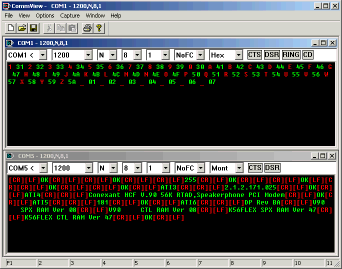
| Supports simultaneous terminal windows. Provides multi-threaded
communications for high performance. The number of terminal windows is limited
only by available resources. |
| Monitor mode displays received character codes, for example, carriage
return = [CR] . |
| Hex mode shows hexadecimal values of received characters. |
| Status of handshake lines are shown in real-time on all ports. |
| Device communications profiles may be named and saved. Programmable
function keys allow easy interaction with various devices: bar-code readers,
ASCII terminals, etc. |
| Intercept cable can be built to allow monitoring both receive and transmit
channels of the communications flow between two devices simultaneously. |
| Data received from any port window may be captured to a file. |
| CommView executable file may be copied to a flash drive or network drive to run on other computers without installation. |
| Tools Menu provides ASCII chart and data converter to convert between floating point values and IEEE-754, and decimal/hexadecimal values. |